LEARN TO FLY
The Four Forces of Flight
Lift, Weight, Thrust & Drag
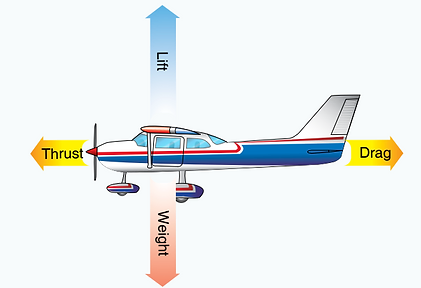
Every aircraft in flight balances four forces: lift, weight, thrust, and drag. Understanding how they work together is the foundation of all flight.
The upward force created by the wings moving through the air. Lift pushes the plane up against gravity.
Gravity pulling the aircraft down toward Earth. A heavier plane needs more lift to stay up.
The forward force from engines or a propeller that pushes the aircraft through the air.
Air resistance pushing backward against the moving aircraft. Sleek shapes reduce drag.
Imagine holding your hand out of a moving car window. Tilt it up and the air pushes your hand upward, that's lift. Tilt it flat and the air pushes it back, that's drag.
A plane is balanced when lift equals weight and thrust equals drag. More lift than weight? The plane climbs. More thrust than drag? It speeds up.
Pilots manage these four forces all the time. Taking off? More thrust and lift. Landing? Less thrust, and weight brings the plane gently down.
The Wright Brothers' first flight in 1903 lasted just 12 seconds and covered 120 feet, shorter than the wingspan of a modern Boeing 747!